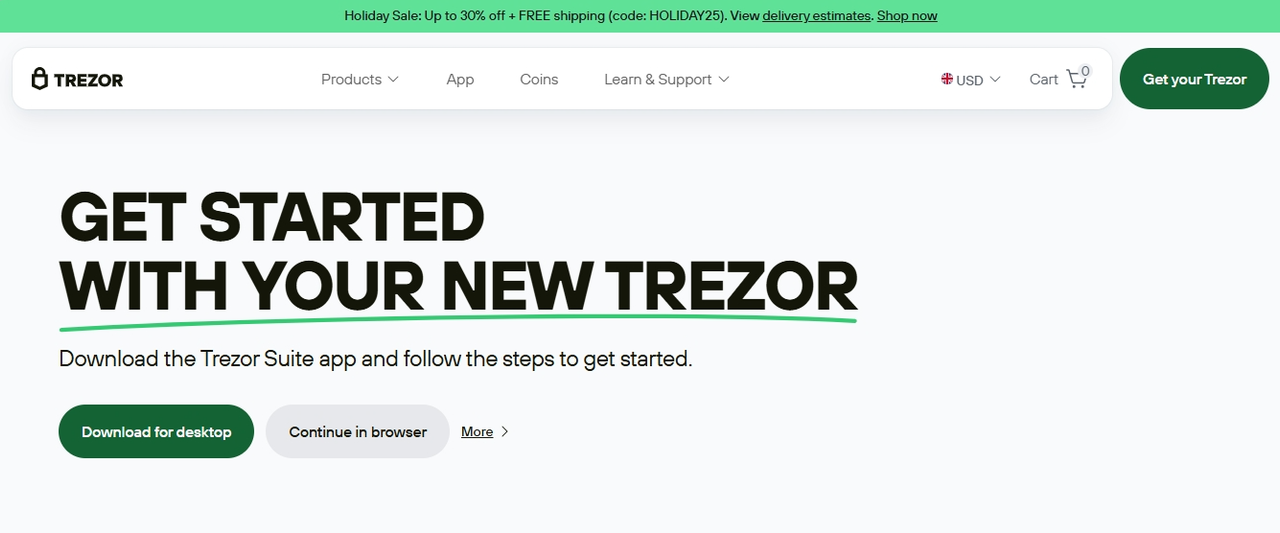
Trezor Login plays a vital role in securing cryptocurrency holdings in an era where digital threats are constantly evolving. As one of the earliest and most trusted hardware wallet providers, Trezor has built its login system around the principle of complete user control. Rather than relying on centralized servers or password-based systems, Trezor Login emphasizes physical verification and cryptographic security.
For individuals who value privacy and ownership, Trezor Login offers a powerful alternative to traditional online authentication. By keeping private keys offline and requiring on-device confirmation, Trezor significantly reduces the risk of unauthorized access and digital theft.
Trezor Login refers to the authentication process used when accessing wallets, applications, or services that integrate with a Trezor hardware device. Instead of logging in with a username and password, users authenticate by connecting their Trezor device and confirming actions directly on the hardware.
This approach ensures that sensitive cryptographic information never leaves the device. Private keys are stored securely within the Trezor hardware wallet and are never exposed to the internet, making Trezor Login one of the safest ways to access digital assets.
Traditional login systems depend heavily on passwords, emails, or SMS-based verification. While convenient, these methods are vulnerable to phishing attacks, data breaches, and malware. Trezor Login eliminates many of these weaknesses by removing passwords entirely from the authentication process.
With Trezor Login, authentication requires physical possession of the device and user approval via the device interface. This physical layer of security ensures that even if a computer or smartphone is compromised, attackers cannot gain access without the hardware wallet itself.
The Trezor Login process begins when the user connects their Trezor device to a supported platform or application. The platform sends an authentication request, which is verified by the Trezor device using cryptographic signatures.
The user then confirms the request on the device screen, often by pressing physical buttons. Since the confirmation happens offline within the hardware wallet, sensitive information remains protected from keyloggers, spyware, and other digital threats.
One of the most important benefits of Trezor Login is its resistance to phishing attacks. Fake websites and malicious links cannot trick the device into revealing private keys, as Trezor never shares this information externally.
Another major advantage is protection against malware. Even if a device is infected with malicious software, the attacker cannot authorize transactions or logins without physical access to the Trezor hardware wallet.
To get the most out of Trezor Login, users should always download wallet software and browser extensions from official sources. Keeping firmware updated is essential, as updates often include security improvements and support for new features.
The recovery seed phrase should be stored offline in a secure location and never entered into a website or shared with anyone. This phrase is the ultimate backup and must be protected with extreme care.
A common mistake is responding to fake support messages that request recovery phrases or device details. Trezor will never ask users to provide sensitive information online. Any such request should be treated as a potential scam.
Another mistake is using untrusted or public computers for wallet access. While Trezor Login is highly secure, using trusted devices and networks further strengthens overall protection.
Trezor Login reflects a broader shift toward decentralized and user-controlled authentication systems. As concerns about data privacy and centralized breaches grow, hardware-based login methods are gaining attention beyond cryptocurrency.
In the future, Trezor-style authentication could be used for accessing financial platforms, decentralized applications, and digital identities. This model empowers users to remain in full control of their data without relying on third-party intermediaries.
Trezor Login offers a robust, secure, and user-focused approach to accessing cryptocurrency assets. By combining offline key storage, physical confirmation, and cryptographic verification, it provides strong protection against many of the risks associated with digital finance.
Whether you are a beginner or an experienced crypto user, understanding how Trezor Login works and following best security practices can help ensure long-term safety. In a world where digital threats continue to grow, Trezor Login stands as a reliable foundation for secure crypto ownership.